
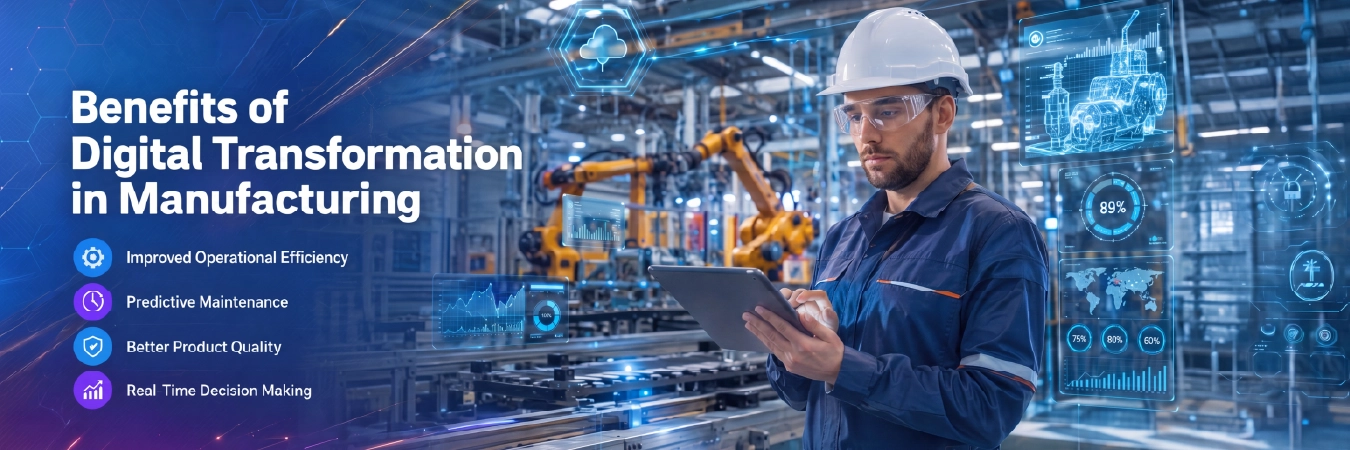
Benefits of Digital Transformation in Manufacturing for Operational Excellence
Manufacturing is undergoing a significant transformation driven by digital technologies, data, and intelligent automation. Companies are moving beyond traditional production methods to create connected, agile, and highly efficient manufacturing environments. The benefits of digital transformation in manufacturing extend far beyond automation—they help organizations improve operational efficiency, reduce costs, enhance product quality, and respond faster to changing market demands.
As global competition intensifies, manufacturers need smarter processes that enable real-time decision-making, predictive maintenance, seamless collaboration, and improved customer experiences. Organizations that embrace digital transformation are better positioned to achieve operational excellence while maintaining long-term competitiveness.
At Fidel, we help manufacturing companies accelerate their digital transformation journey through AI-driven solutions, software engineering, data analytics, cloud technologies, localization, and digital engineering services.
What is Digital Transformation in Manufacturing?
Digital transformation in manufacturing refers to the integration of digital technologies across manufacturing operations to improve productivity, efficiency, quality, and business performance. It combines technologies such as Artificial Intelligence (AI), Industrial Internet of Things (IIoT), cloud computing, robotics, machine learning, data analytics, and digital twins to create intelligent manufacturing ecosystems.
Rather than simply digitizing manual processes, digital transformation redefines how manufacturers design products, manage production, optimize supply chains, monitor assets, and deliver customer value.
Manufacturers today are leveraging connected systems that provide real-time insights into machines, production lines, inventory, quality, and workforce performance, enabling informed decisions based on data instead of assumptions.
Key Benefits of Digital Transformation in Manufacturing
Organizations investing in digital technologies experience measurable improvements across their operations. Some of the major benefits of digital transformation in manufacturing include:
1. Improved Operational Efficiency
Digital technologies automate repetitive tasks, eliminate manual interventions, and streamline workflows across departments.
Manufacturers gain:
- Faster production cycles
- Reduced process bottlenecks
- Better resource utilization
- Standardized operations
- Increased productivity
Automated workflows also minimize human errors while ensuring greater consistency across production processes.
2. Predictive Maintenance and Reduced Downtime
Unexpected equipment failures can significantly impact production schedules and profitability.
Using AI, IoT sensors, and predictive analytics, manufacturers can continuously monitor machine health and detect potential failures before they occur.
Benefits include:
- Reduced unplanned downtime
- Lower maintenance costs
- Extended equipment life
- Improved asset utilization
- Better maintenance planning
Predictive maintenance enables maintenance teams to take proactive action instead of reacting to equipment breakdowns.
3. Better Product Quality
Quality control becomes more intelligent with digital inspection systems, AI-powered image recognition, and real-time monitoring.
Manufacturers can identify defects early, reduce scrap, and ensure products consistently meet quality standards.
This leads to:
- Higher first-pass yield
- Fewer customer complaints
- Reduced rework
- Improved compliance
- Greater customer satisfaction
4. Real-Time Decision Making
Modern manufacturing generates enormous amounts of operational data.
Digital platforms consolidate information from machines, ERP systems, MES, warehouses, and supply chains into centralized dashboards.
Decision-makers gain visibility into:
- Production performance
- Equipment utilization
- Inventory levels
- Energy consumption
- Quality metrics
- Supply chain status
Real-time insights enable faster responses to production issues and changing business conditions.
5. Increased Workforce Productivity
Digital tools empower employees with better information and automation support.
Examples include:
- Mobile workforce applications
- Digital work instructions
- Smart scheduling
- AI-assisted decision support
- Collaborative robotics (Cobots)
Employees spend less time on repetitive administrative tasks and more time on value-added activities.
Why Manufacturing Digital Transformation is Becoming a Business Priority?
Manufacturing digital transformation is no longer optional—it has become essential for organizations looking to remain competitive in rapidly evolving markets.
Several factors are driving this shift:
- Rising customer expectations
- Supply chain disruptions
- Increasing operational costs
- Labor shortages
- Sustainability initiatives
- Demand for customized products
Digital transformation helps manufacturers become more resilient by improving agility, visibility, and responsiveness across the entire value chain.
Companies can rapidly adapt production schedules, monitor supplier performance, and optimize inventory without sacrificing efficiency.
Technologies Driving Digital Transformation Manufacturing
Technologies Driving Digital Transformation Manufacturing
Several advanced technologies are reshaping digital transformation manufacturing initiatives.
- Artificial Intelligence: AI helps optimize production planning, quality inspection, predictive maintenance, and demand forecasting through intelligent data analysis.
- Industrial Internet of Things (IIoT): Connected sensors collect real-time operational data from machines and production lines, providing continuous visibility into manufacturing performance.
- Cloud Computing: Cloud platforms enable centralized data management, remote monitoring, scalability, and secure collaboration across multiple manufacturing locations.
- Data Analytics: Advanced analytics convert manufacturing data into actionable business insights, helping organizations improve efficiency and identify optimization opportunities.
- Robotics and Automation: Modern robotic systems increase production speed while maintaining consistent product quality and reducing repetitive manual work.
- Digital Twins: Digital twin technology creates virtual models of machines, factories, or production lines, enabling manufacturers to simulate changes before implementing them in real operations.
How Digital Transformation Manufacturing Industry Improves Supply Chain Performance?
The digital transformation manufacturing industry is extending beyond factory operations into end-to-end supply chain management.
Digital supply chains provide:
- Real-time inventory visibility
- Demand forecasting
- Supplier performance monitoring
- Automated procurement
- Logistics optimization
- Warehouse automation
Manufacturers gain greater transparency throughout their supply chain, helping reduce delays, improve inventory accuracy, and enhance customer service.
Integrated digital platforms also enable better collaboration among suppliers, manufacturers, distributors, and customers.
Common Challenges During Digital Transformation
While the opportunities are significant, manufacturers often face challenges such as:
- Legacy systems integration
- Data silos
- Cybersecurity concerns
- Skills shortages
- Change management
- Technology adoption costs
Successful digital transformation requires a clear roadmap, scalable technology architecture, employee training, and experienced implementation partners who understand manufacturing processes.
Why Choose Fidel Softech for Manufacturing Digital Transformation?
At Fidel Softech, we combine deep manufacturing domain expertise with advanced digital technologies to help organizations modernize operations and achieve operational excellence.
Our capabilities include:
- AI and Machine Learning solutions
- Data Analytics and Business Intelligence
- Industrial Automation Support
- Software Development
- Cloud Solutions
- Digital Engineering
- IoT-enabled applications
- Enterprise Software Integration
- Manufacturing Localization Services
- Japan-focused Engineering and Technology Services
Whether you’re modernizing legacy systems, implementing AI-driven manufacturing solutions, or expanding operations globally, our team delivers tailored digital transformation strategies aligned with your business objectives.
Connect with Fidel
The benefits of digital transformation in manufacturing extend across every aspect of modern manufacturing—from production and maintenance to quality, supply chain management, and customer satisfaction. Organizations that embrace digital technologies gain greater operational efficiency, improved agility, reduced costs, and stronger competitive advantages.
As manufacturing continues to evolve, investing in intelligent digital solutions is no longer just a technology initiative—it is a strategic business decision that drives sustainable growth and operational excellence.
With extensive experience in software engineering, AI, digital transformation, and manufacturing technology solutions, Fidel helps manufacturers successfully navigate their digital transformation journey and unlock long-term business value.
Connect with us at sales@fidelsoftech.com.
Ref. No – FB07261111
Related Blogs

A Smarter Power BI Alternative: Spoggle AI
The data analytics landscape is changing fast. Businesses that once relied on traditional BI tools like Microsoft Power BI are increasingly finding...

Choosing Between Outsourcing vs Staff Augmentation for Software Development
Are you looking to develop a software solution for your company but wondering whether to go for outsourcing vs staff augmentation? Then, let us tell...
Custom Accounting Software Development for Industry-Specific Needs
Custom accounting software development becomes essential when businesses rely on accounting systems that promise universal compatibility,...